Neighbourhoods · 5 min
The new rules on the flat-rate tax
A two-room flat in Prati, two dates on the calendar and a proposal that could change the financial situation for tenants in 2027.

Founder · Head of Luxury Residential Advisory · 13 November 2026
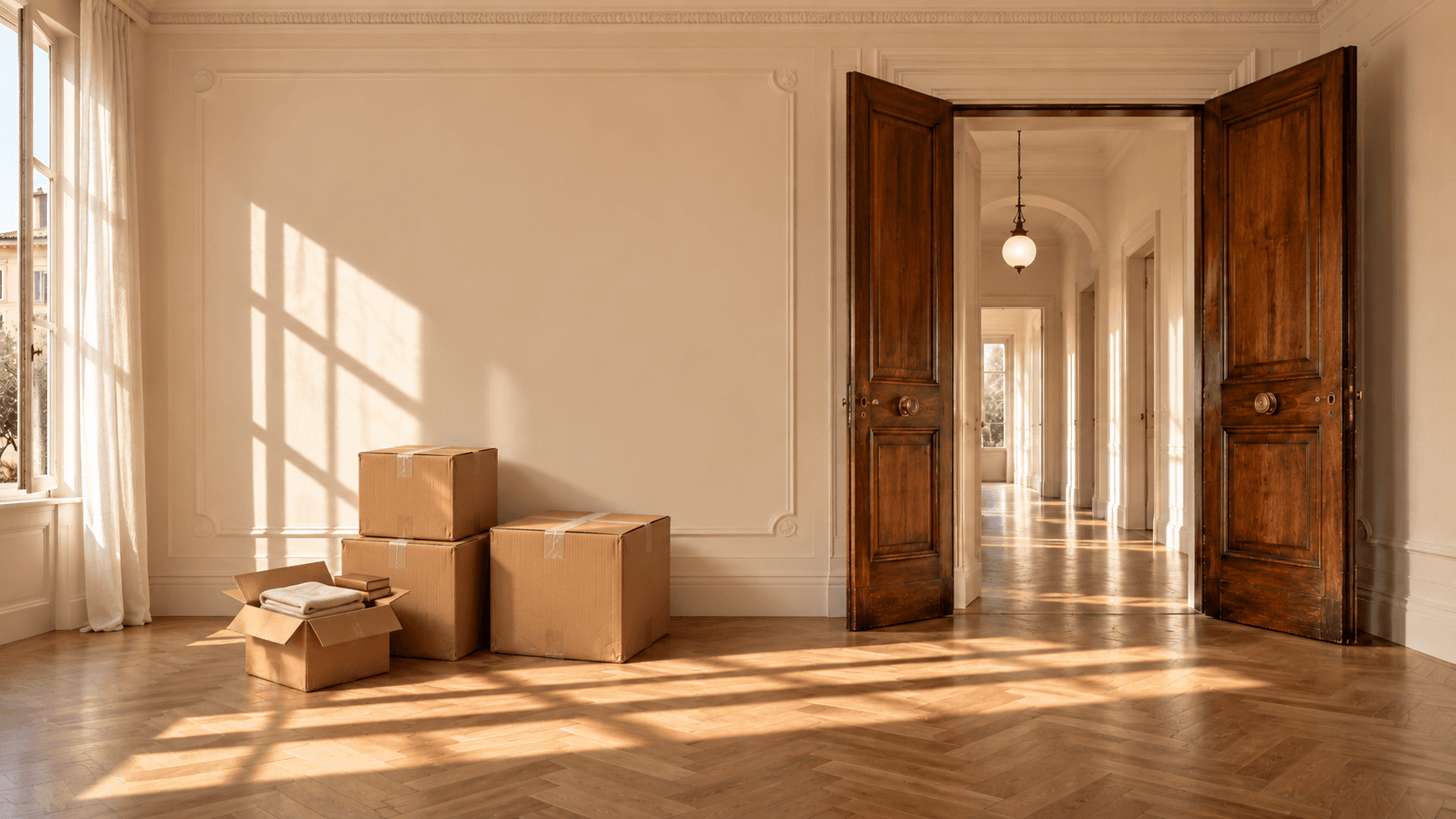
On the first evening without tenants, Paolo goes into the two-room flat in Prati and opens the windows. On the living room windowsill, there’s a mark left by a vase. On the table, next to the keys, is the piece of paper on which he’s jotted down the things he needs to sort out before renting it out again. A lick of paint, a lock to be changed, two chairs for the kitchen.
His phone vibrates. His daughter has sent him an article about the flat-rate tax. ‘Dad, have you seen this? If the tenant is under 36, you might only have to pay 1 per cent.’
Paolo reads the message again. Then he opens his calendar. He’d been planning to put the advert up the following Monday. Now he wants to work out whether it makes sense to wait until January.
The date to circle is the signing date
As of 13 November 2026, the 5 per cent and 1 per cent rates are still proposals contained in Article 5 of the 2027 Budget Bill (A.C. 3174-bis), currently under consideration by the Chamber of Deputies. Currently, for residential tenancies, the flat-rate tax is generally 21 per cent. For rent-controlled tenancies that meet the requirements, the reduced rate is 10 per cent.
If Parliament were to approve the current text, the flat-rate tax would fall to 5 per cent for new agreed-rent residential tenancies entered into in 2027. It would fall to 1 per cent if the tenant had not yet reached the age of 36 at the time of signing. The proposed rates would apply to rents for the period from 1 January 2027 to 31 December 2031, including those for the first renewal of a tenancy agreement entered into in 2027, provided that renewal takes place by that same deadline.
Paolo is thinking about his brother’s flat, whose tenancy agreement expires in the spring. ‘So does this apply to him too, when he renews?’ For a tenancy agreement entered into before 2027 and simply extended or renewed during 2027, the draft bill excludes the new rates. It also provides for exemptions if a tenancy agreement in force on 30 September 2026 is terminated early and a new agreement is drawn up for the same property with the same parties. Under certain conditions, the exemption also applies to a new agreement signed with someone who was already living there or was part of the previous tenant’s household.
Before the tax rate, there’s the rent
The next morning, Paolo measures the living room. He wants to work out whether the thousand euros a month he has in mind falls within the expected range for his two-room flat. The agreed rent, governed by Law No. 431/1998, is determined using the bands set out in the local agreement and the property’s characteristics. Roma Capitale publishes the applicable agreements. In municipalities without such an agreement, the Ministerial Decree of 14 July 2004 provides for reference to the agreement of the nearest demographically similar municipality, in the cases governed by the decree. To qualify for tax relief, one must then check the requirements for each specific benefit, including the location of the property where required.
He is reminded of a young woman who had viewed the flat months earlier. She was studying in Rome and was looking for accommodation for the duration of her course. Rental agreements for university students living away from home and temporary tenancies with an agreed rent are also eligible for the reduced 10 per cent flat-rate tax when the respective conditions are met. For students, the relevant factors include, amongst other things, the location of the course, the location of the accommodation and residence in a municipality other than that where the course is held. There are also specific conditions for certain municipalities affected by natural disasters. If the tenancy agreement is concluded without the assistance of the signatory organisations, it is necessary to check whether a certificate of compliance with the territorial agreement is required, as clarified by the Italian Revenue Agency in Resolution 31/E of 2018.
One thousand euros a month, three different calculations
To run a simulation, Paolo assumes that the agreed rent is exactly 1,000 euros a month, for twelve months. Based on 12,000 euros a year, the figures for the flat-rate tax alone, before expenses, would be as follows.
RateAnnual flat-rate taxAnnual rent after flat-rate tax
10%, current preferential rate
€1,200
€10,800
5%, proposed rate
€600
€11,400
1%, proposed rate for tenants under 36
€120
€11,880
At 5%, he would save 600 euros a year. At 1%, 1,080 euros. Then he looks at the calendar again. Just one month with the flat empty would cost him 1,000 euros in gross rent. The idea of waiting until January is starting to come at a specific cost.
The spreadsheet also includes a row for the IMU. For properties let at an agreed rent, Article 1, paragraph 760, of Law No. 160/2019 already provides that the tax is reduced to 75 per cent of the amount calculated using the applicable local council rate. If you were to opt for ordinary taxation, a different calculation would apply: Article 8 of Law No. 431/1998 provides, in eligible cases, for a further 30 per cent reduction in IRPEF taxable income for 3+2 tenancy agreements and for university tenancies that meet the requirements. Ordinary transitional contracts are excluded from this specific IRPEF reduction.
Paolo leaves 10 per cent in today’s accounts column. Next to it, he notes down 5 per cent and 1 per cent, with a date to be checked again once the budget is approved. Then he calls the locksmith. The lock needs changing anyway. To decide when to publish the advert, he now knows which three figures he needs: the agreed rent applicable, the cost of the months the property has been vacant, and the tax rate he will actually be able to use.
If you’re considering letting a property in Rome, Valori & Partners can help you estimate the rent and compare the different letting options based on your flat’s figures.
The neighbourhood: Prati