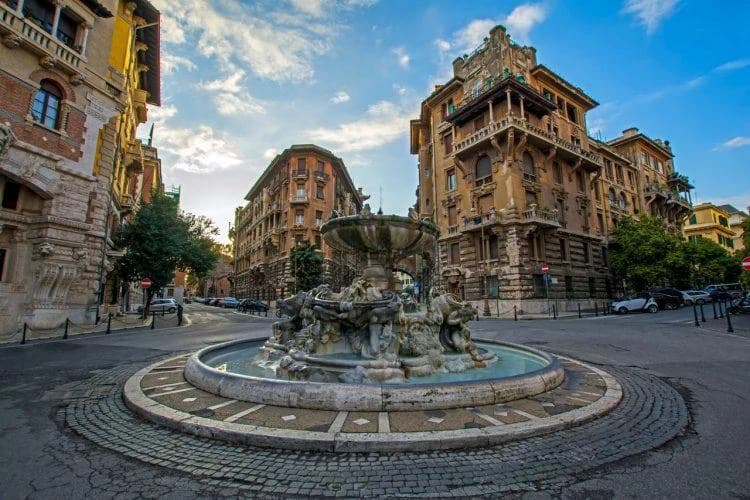
Coppedè is not simply a neighbourhood, but one of Rome’s rarest and most recognisable architectural landmarks. A small urban universe designed between 1915 and 1927 by the Florentine architect Gino Coppedè, who transformed palaces and villas into unique works of art, blending Art Nouveau with medieval, neo-Gothic, Baroque, Renaissance, classical and Art Deco influences.
His style is evident in the turrets, loggias, mosaics, majolica tiles, wrought ironwork, floral decorations and fantastical figures that bring the façades to life. Spiders, frogs, griffins, masks, coats of arms and symbolic motifs ensure that each building has its own distinct identity, far removed from any kind of mass-produced repetition.
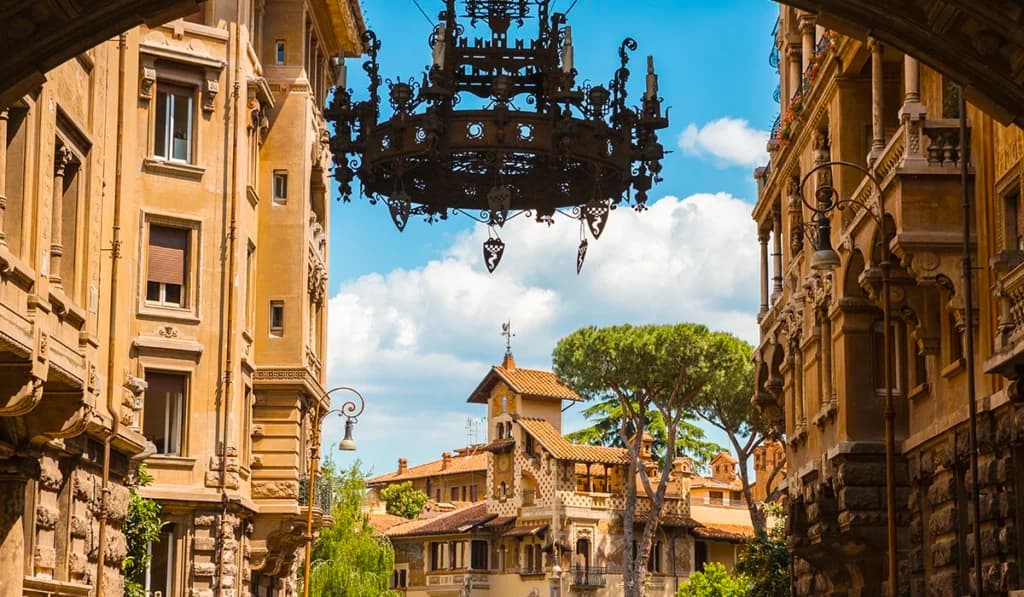
The most famous entrance is that of the Palazzi degli Ambasciatori, joined by a monumental arch beneath which hangs a large wrought-iron chandelier, which has now become one of the neighbourhood’s symbols. The connection with cinema runs through the entire Coppedè complex. The arch above the entrance to one of the buildings in Piazza Mincio is, in fact, modelled on a set design from Cabiria, a silent film masterpiece from 1914. The neighbourhood’s architecture went on to captivate directors such as Dario Argento, who set scenes from The Bird with Crystal Feathers and Hell, as well as serving as the setting for The Omen and, more recently, House of Gucci.
The neighbourhood was home to figures from the worlds of culture and entertainment, including the famous tenor Beniamino Gigli, who had his Roman residence here. Gino Coppedè himself also lived in the area bearing his signature, designed from the outset for the upper middle classes, diplomatic missions and clients accustomed to standing out from the crowd.
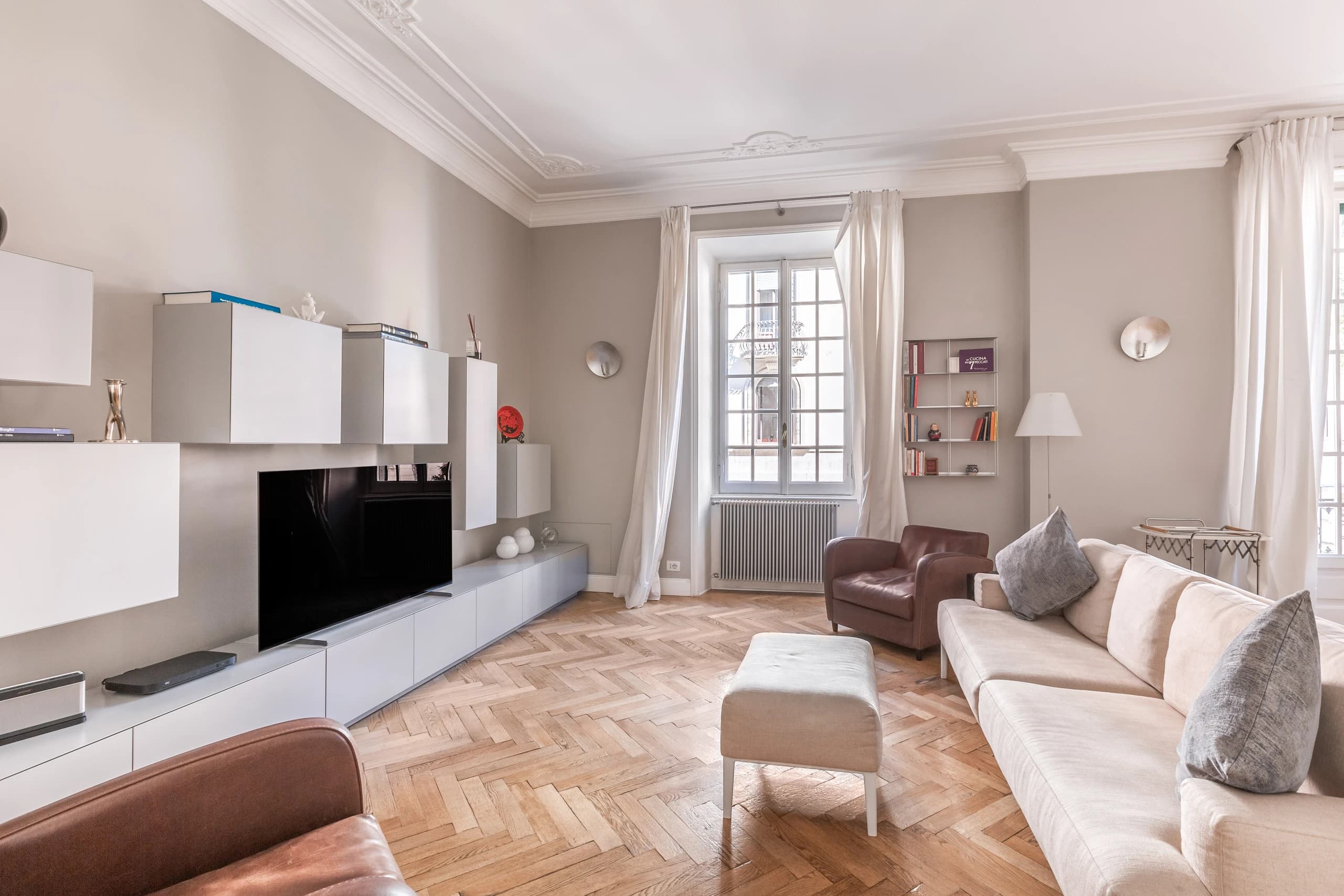
From a property perspective, this identity translates into an exceptionally limited supply. The properties are situated in buildings that are difficult to compare with the rest of the Roman market and may feature high ceilings, reception rooms, parquet flooring, mosaics, original decorations and views of unique architectural features.
Living at Coppedè means being one of the very few people who can enjoy this heritage every day. You are not just buying a house, but gaining access to an iconic, instantly recognisable and unique location, where property value meets the history of art, architecture and cinema.
Properties in this zone
Sold here